Cooling creates water
As warm indoor air passes over the cold evaporator coil, moisture condenses and drips into a drain pan, then flows out through a condensate line. In a long Fort Worth summer, that system runs for months. When any part of the path fails, water ends up where it should not.
Common failure points
Most HVAC related mold traces back to a few places.
- A clogged condensate line that overflows the drain pan
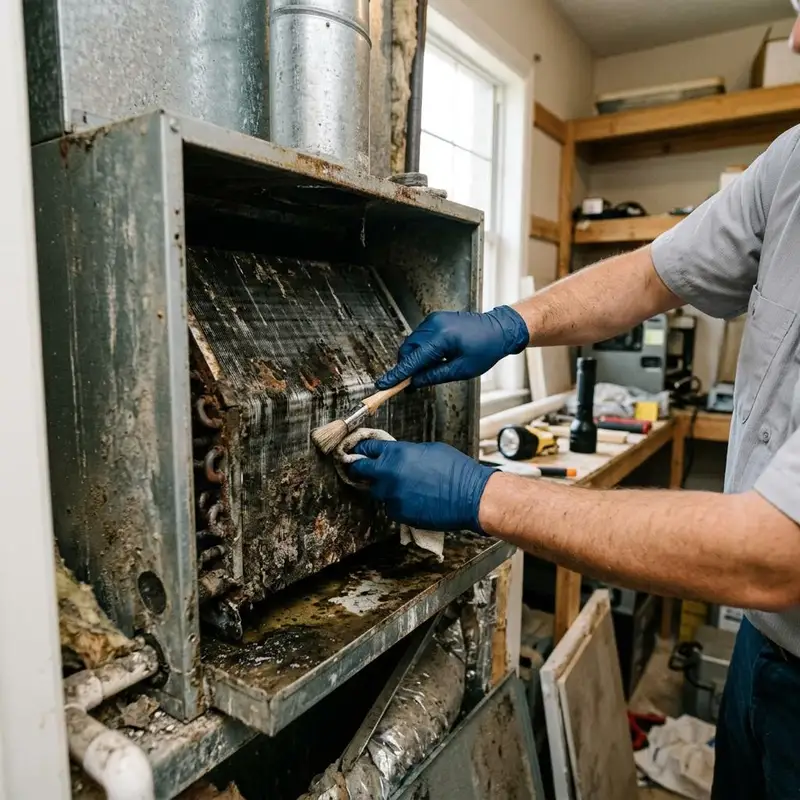
- A rusted or cracked drain pan
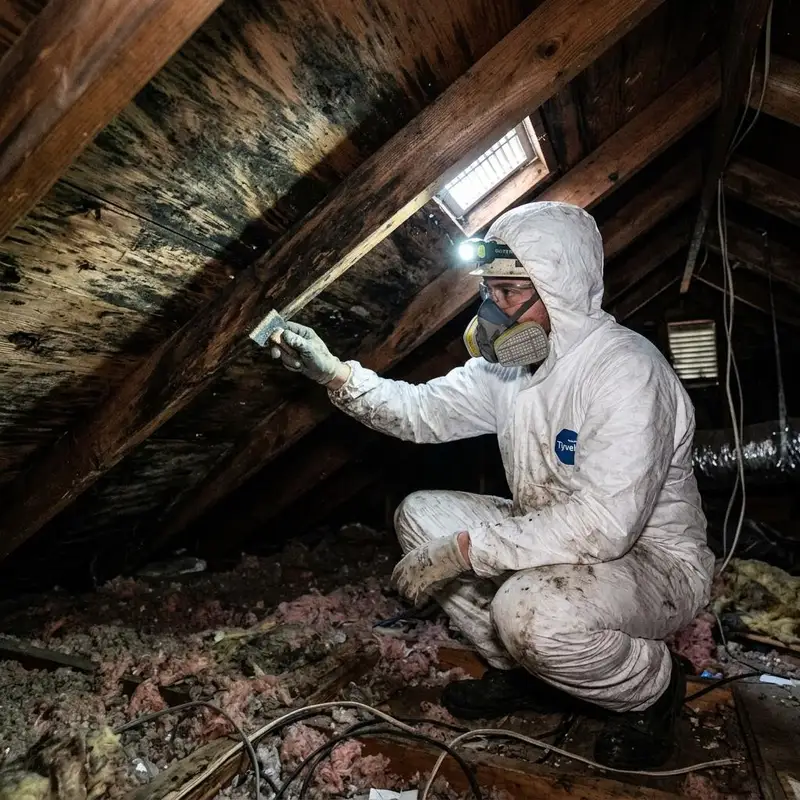
- Ducts in the attic with gaps in insulation that sweat
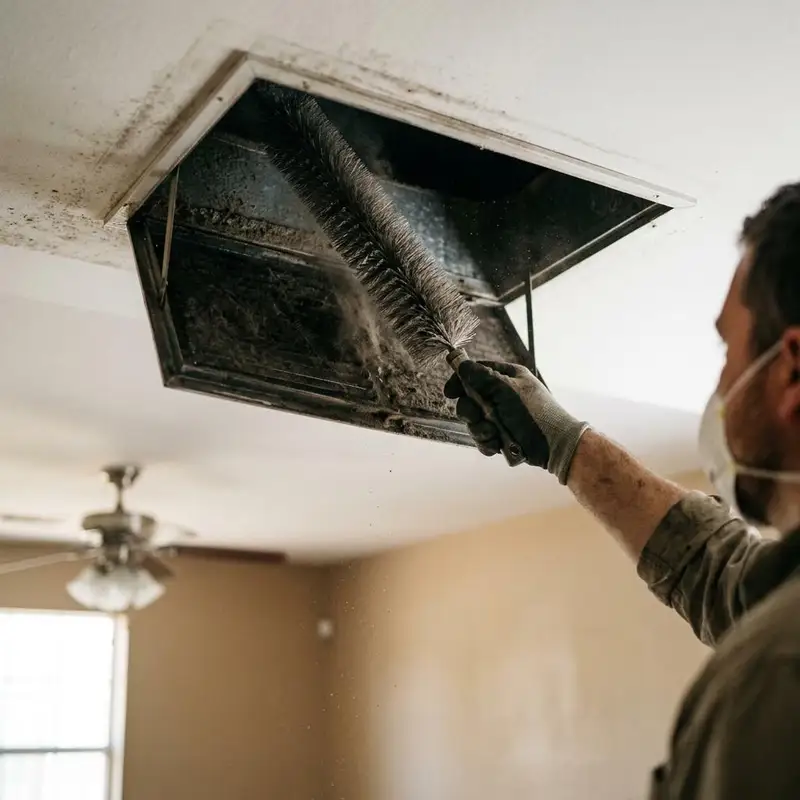
- Register boots on ceilings that collect condensation
- An oversized system that cools quickly without removing enough humidity
Signs to watch
A musty smell when the system turns on, water stains around the air handler, dark spots around ceiling registers or a damp closet floor are all reasons to look closer. Odor that follows the airflow through the house points to the system rather than a single room.
Simple prevention habits
Change filters on a regular schedule, keep the condensate line clear, and ask your HVAC contractor to check the drain pan and insulation during routine service. Keep the thermostat at a sensible setting even when you travel, so humidity stays under control.
When growth is already present
If you find growth on the cabinet, closet walls or around registers, cleaning the system and remediating the surrounding materials go hand in hand. Fixing the drainage or insulation problem is what keeps it from coming back.
Talk to Someone About Your Property
If this guide sounds like your situation, call Mold Removal Fort Worth Pros or email [email protected]. You can also browse all services or read more guides.