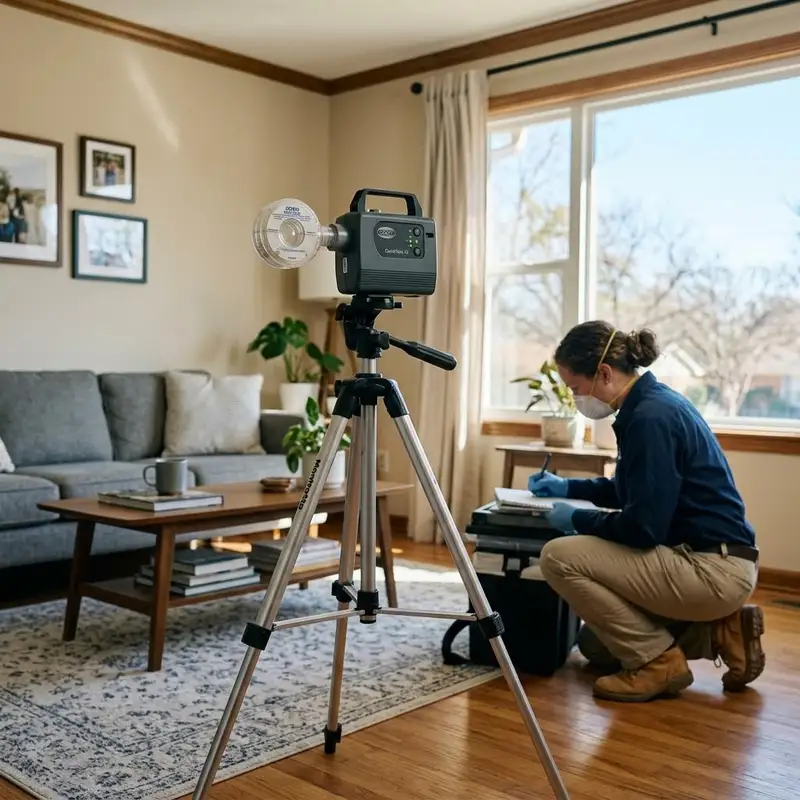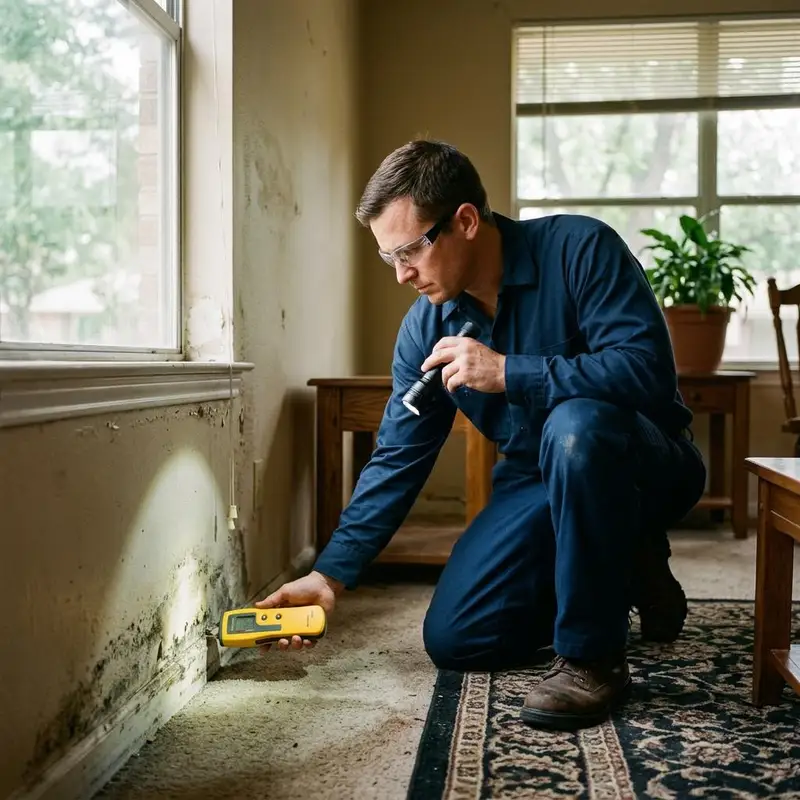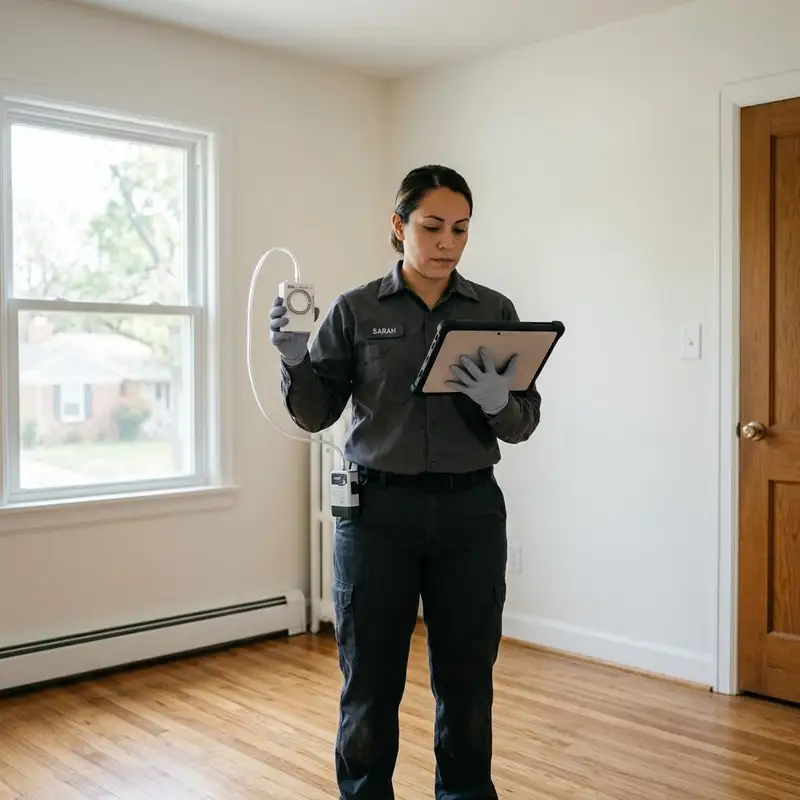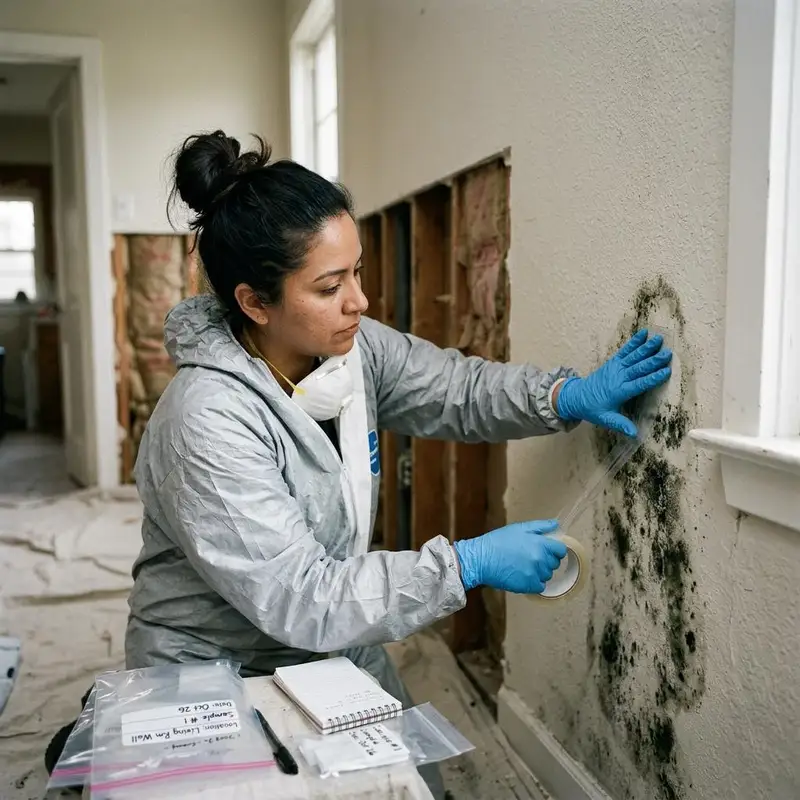
Mold testing collects samples from surfaces or air to identify what types of mold are present and in what amounts. It is a tool, not a ritual. We recommend testing when it will answer a real question, such as whether a stain is mold or whether hidden growth may be affecting indoor air.
The Problem Behind Mold Testing
Testing without a plan can produce numbers that confuse more than they help. Testing visible growth that clearly needs removal may not change the plan. On the other hand, when you smell mold but cannot see it, or need documentation, sampling provides useful information.
Signs You May Need Mold Testing
- Uncertainty whether a stain is mold
- Odor without visible growth
- Need for documentation for a sale, lease or insurer
- Health related concerns about indoor air
What the Work Includes
- Surface sampling by tape lift or swab
- Air sampling with outdoor comparison
- Selection of sample points based on inspection
- Explanation of laboratory results
Our Mold Testing Process
- STEP 1
Define the question
We decide together what the testing should answer.
- STEP 2
Choose methods
Surface, air or both are selected based on the question.
- STEP 3
Collect and send
Samples are collected and typically sent to an independent laboratory.
- STEP 4
Explain results
You get a clear explanation and recommended next steps.
A Fort Worth Consideration
North Texas weather changes outdoor spore levels quickly. That is why air testing in Fort Worth always includes an outdoor comparison collected on the same visit.
Mold Testing Near You
We provide mold testing for property owners in Downtown Fort Worth, Forest Hill, Edgecliff Village, Westover Hills, River Oaks, Sansom Park and White Settlement. If you are searching for help nearby, call to describe your situation or email photos to [email protected]. We answer Monday to Saturday, 8am to 7pm.