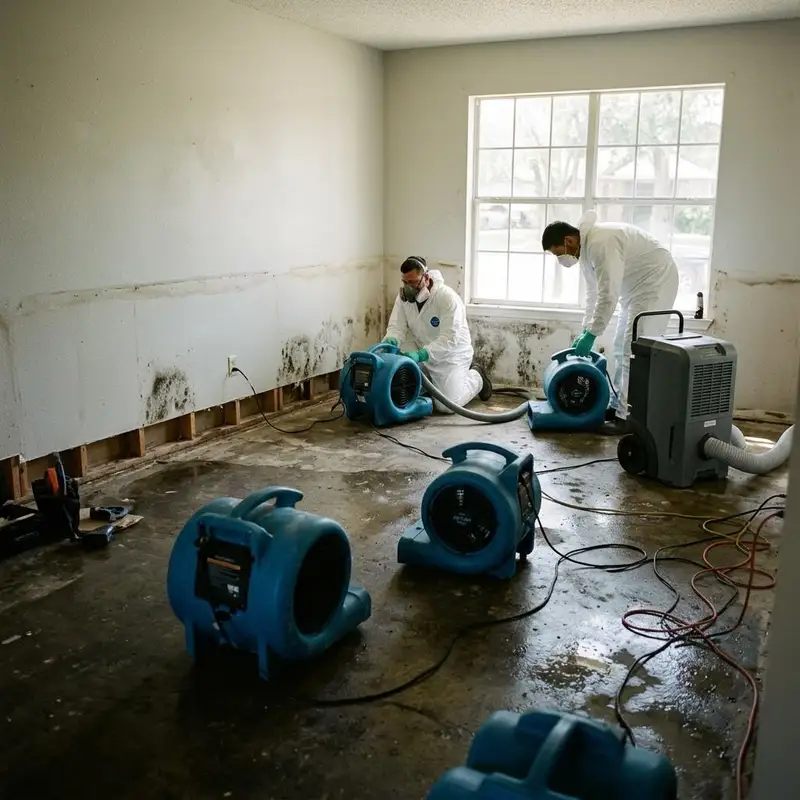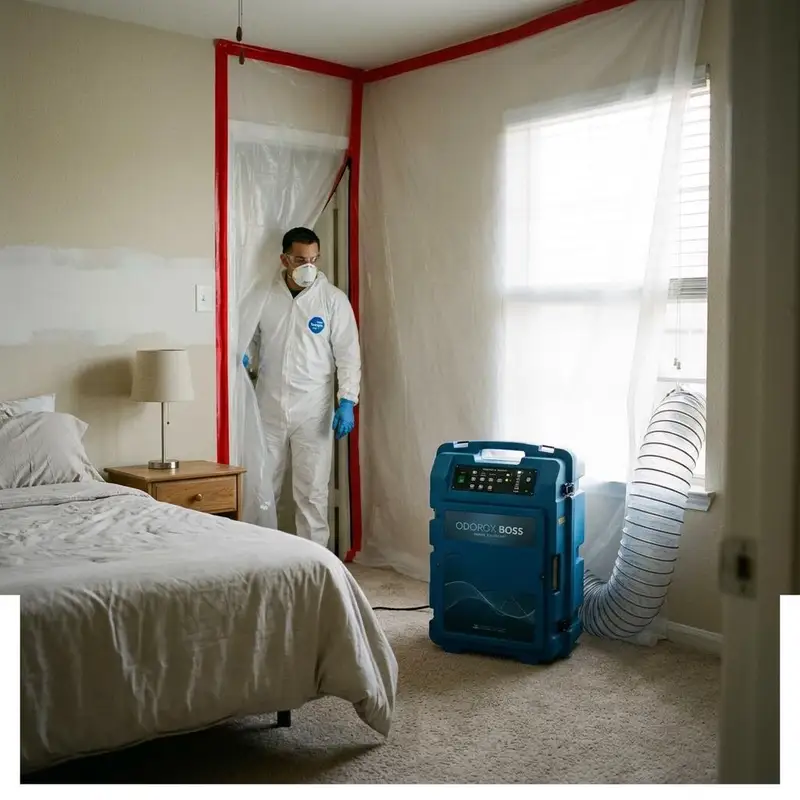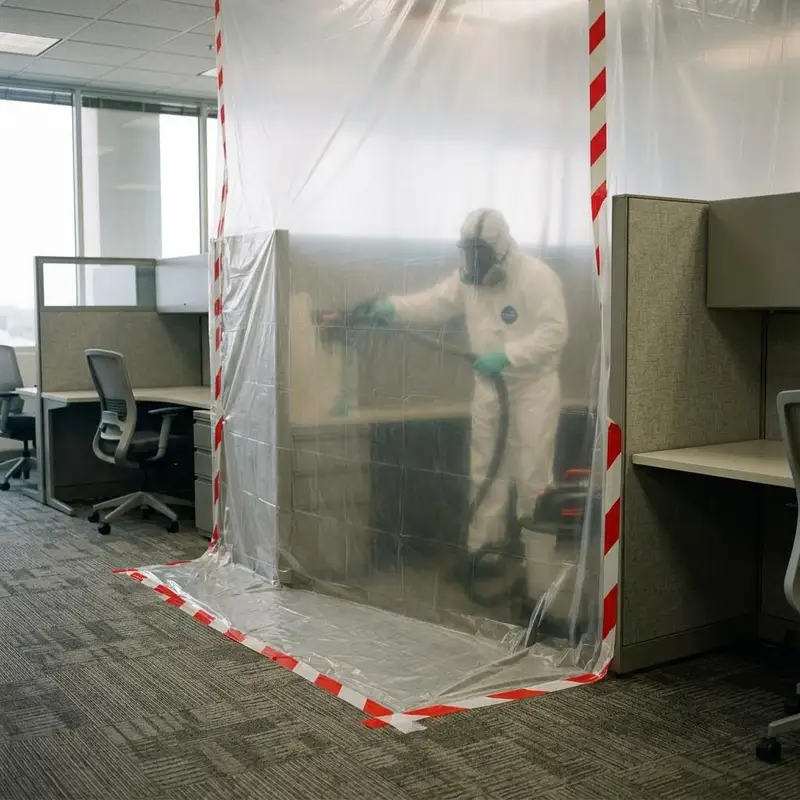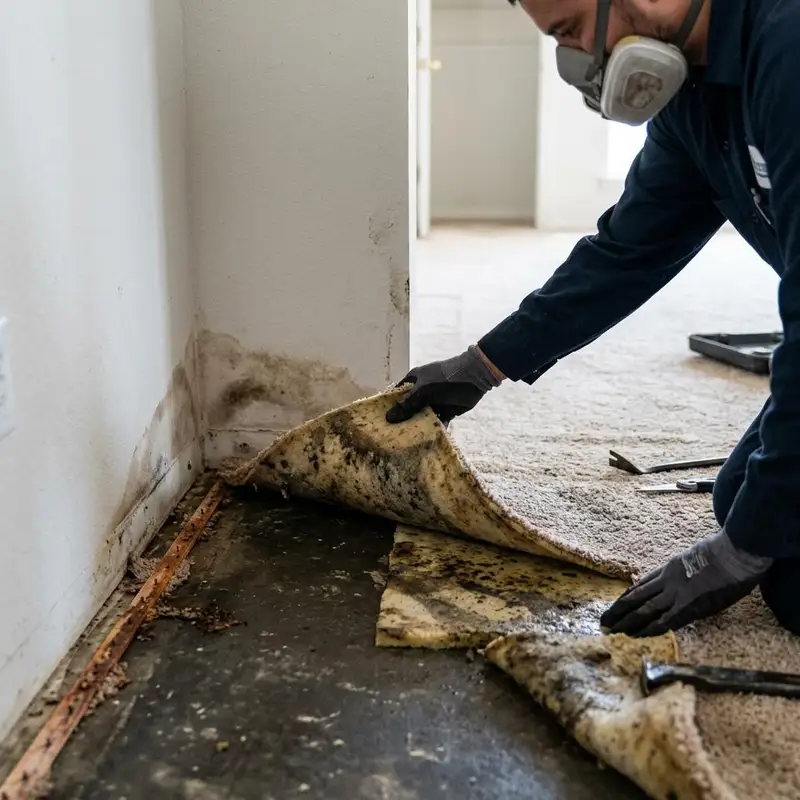
Carpet and padding soak up water and hold it close to the floor, where mold can grow unseen. Carpet mold removal pulls back flooring to inspect the pad and subfloor, removes what cannot be saved and cleans the surface below.
The Problem Behind Carpet Mold Removal
A carpet can look dry on top while the pad underneath stays wet for days after a leak or flood. Pads are rarely salvageable once mold grows in them. Concrete slabs and wood subfloors underneath also need cleaning before new flooring goes down.
Signs You May Need Carpet Mold Removal
- Musty smell rising from carpet
- Dark spots on carpet backing or padding
- Damp feel near walls after a leak
- Stains on tack strips or baseboards
What the Work Includes
- Pulling back carpet to inspect pad and subfloor
- Removal and disposal of contaminated pad and carpet
- HEPA vacuuming and cleaning of slab or subfloor
- Drying support before reinstallation
Our Carpet Mold Removal Process
- STEP 1
Lift and look
We pull back a section to check pad and subfloor condition.
- STEP 2
Decide what stays
Carpet that can be cleaned is separated from material to discard.
- STEP 3
Remove and clean
Contaminated material is bagged and the floor cleaned.
- STEP 4
Dry the floor
Readings confirm dryness before new flooring is installed.
A Fort Worth Consideration
Most Fort Worth homes built on slab foundations have carpet laid directly over concrete. Slab moisture after storms makes that pad especially vulnerable.
Carpet Mold Removal Near You
We provide carpet mold removal for property owners in Downtown Fort Worth, Forest Hill, Edgecliff Village, Westover Hills, River Oaks, Sansom Park and White Settlement. If you are searching for help nearby, call to describe your situation or email photos to [email protected]. We answer Monday to Saturday, 8am to 7pm.