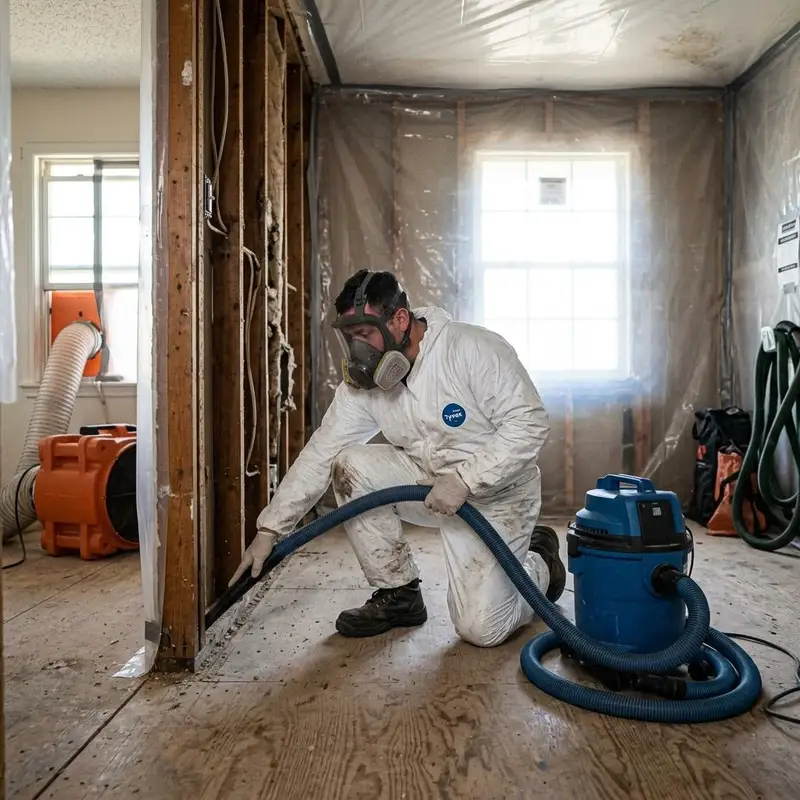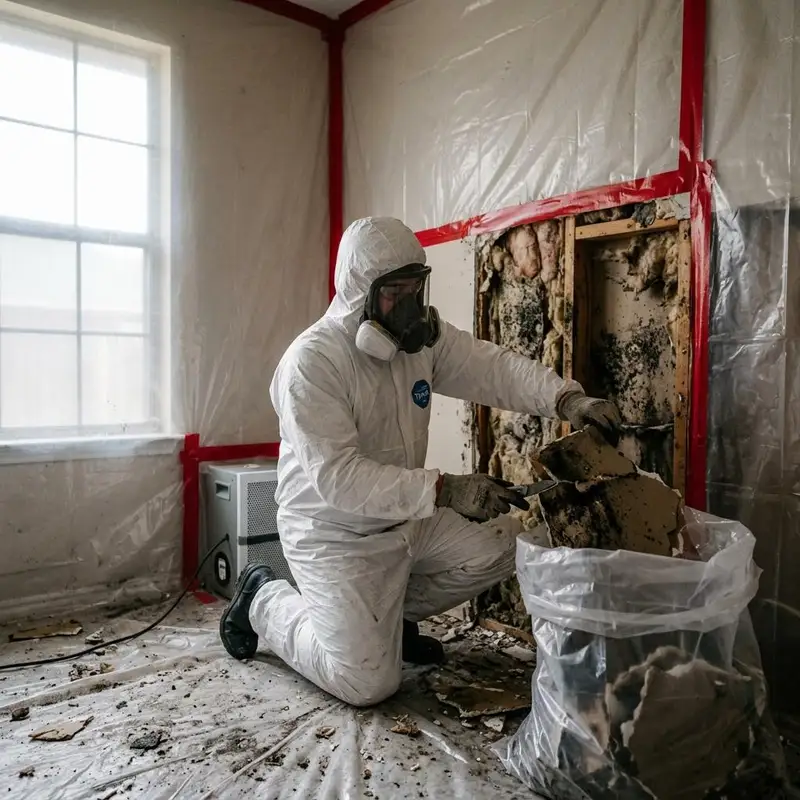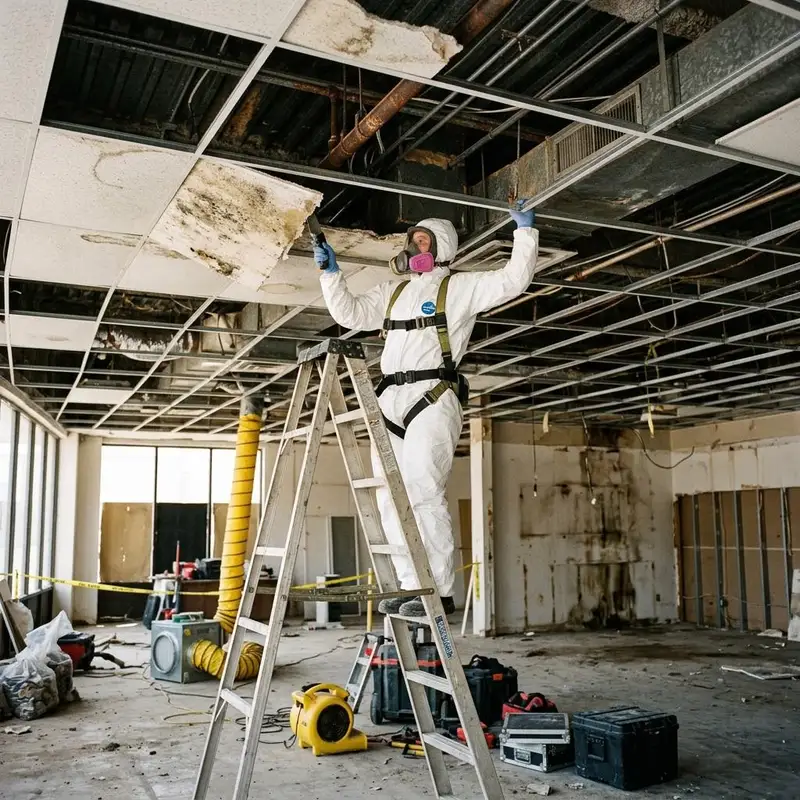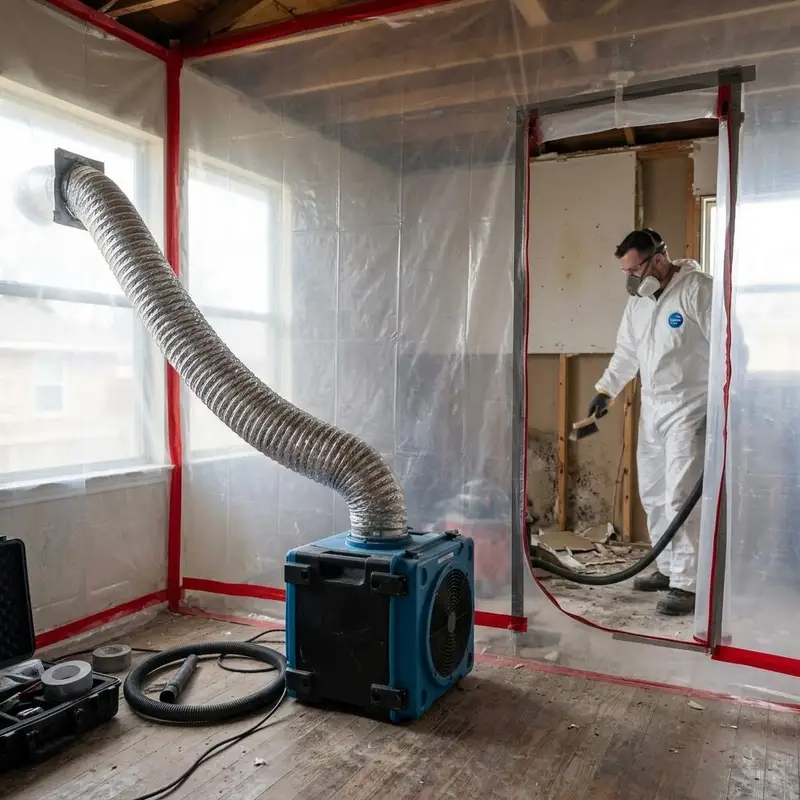
When mold is disturbed, particles go airborne. Negative air pressure containment seals the work area with plastic sheeting and uses filtered air machines to pull air out, so air flows into the work zone rather than out of it.
The Problem Behind Negative Air Pressure Containment
Without containment, removing moldy drywall or insulation can spread particles throughout a home or building, including into HVAC returns. Even careful work releases some material. Negative pressure keeps that material inside a controlled area until it can be captured and cleaned.
Signs You May Need Negative Air Pressure Containment
- Remediation involving drywall, insulation or ceiling removal
- Occupied buildings where people remain nearby
- Sensitive occupants such as children or people with health concerns
- Larger affected areas
What the Work Includes
- Plastic sheeting walls and ceilings with sealed seams
- Zipper doors or airlocks for entry
- Air scrubbers with HEPA filtration exhausting outside the zone
- Sealing of vents, returns and openings
Our Negative Air Pressure Containment Process
- STEP 1
Seal openings
Vents, doorways and penetrations are covered first.
- STEP 2
Build the walls
Sheeting creates a defined, sealed work area.
- STEP 3
Set the air
Air scrubbers are positioned to create negative pressure.
- STEP 4
Maintain it
Containment stays in place until cleanup and verification are complete.
A Fort Worth Consideration
Many Fort Worth homes have central returns in hallways. Sealing those returns during work is essential so the HVAC system does not pull particles through the house.
Negative Air Pressure Containment Near You
We provide negative air pressure containment for property owners in Downtown Fort Worth, Forest Hill, Edgecliff Village, Westover Hills, River Oaks, Sansom Park and White Settlement. If you are searching for help nearby, call to describe your situation or email photos to [email protected]. We answer Monday to Saturday, 8am to 7pm.