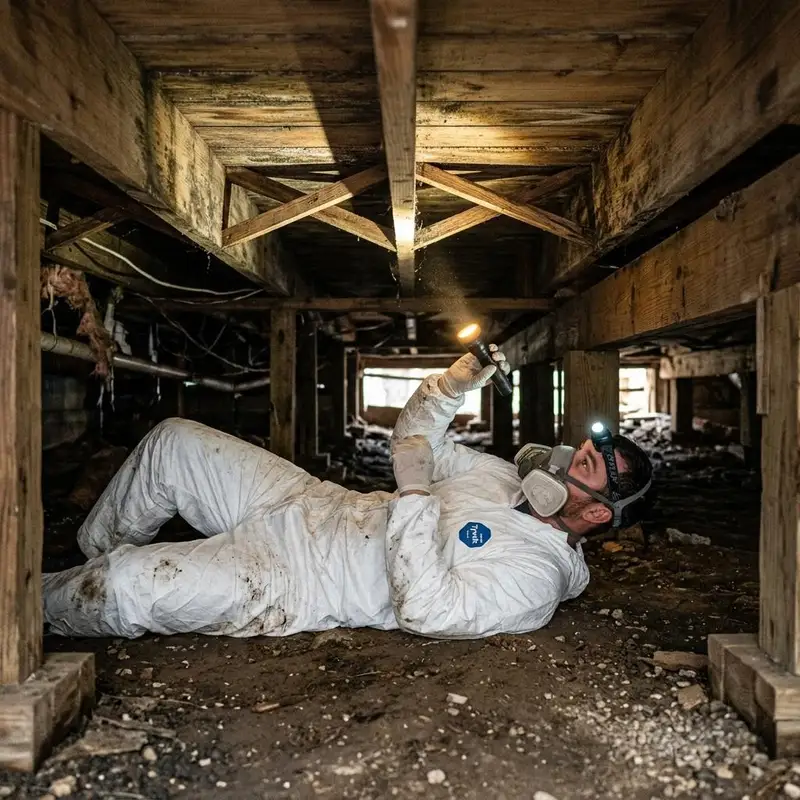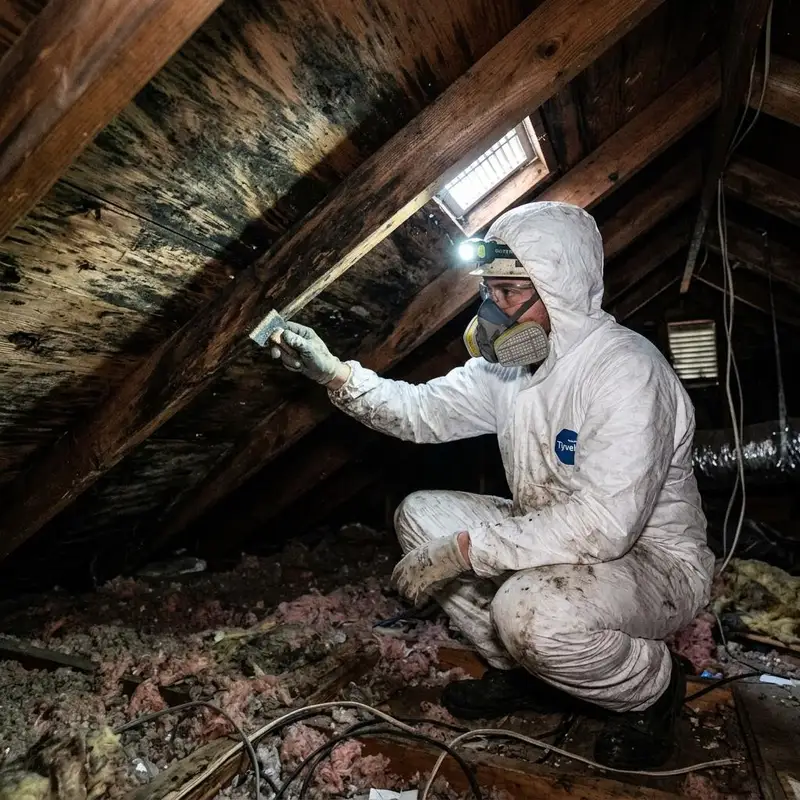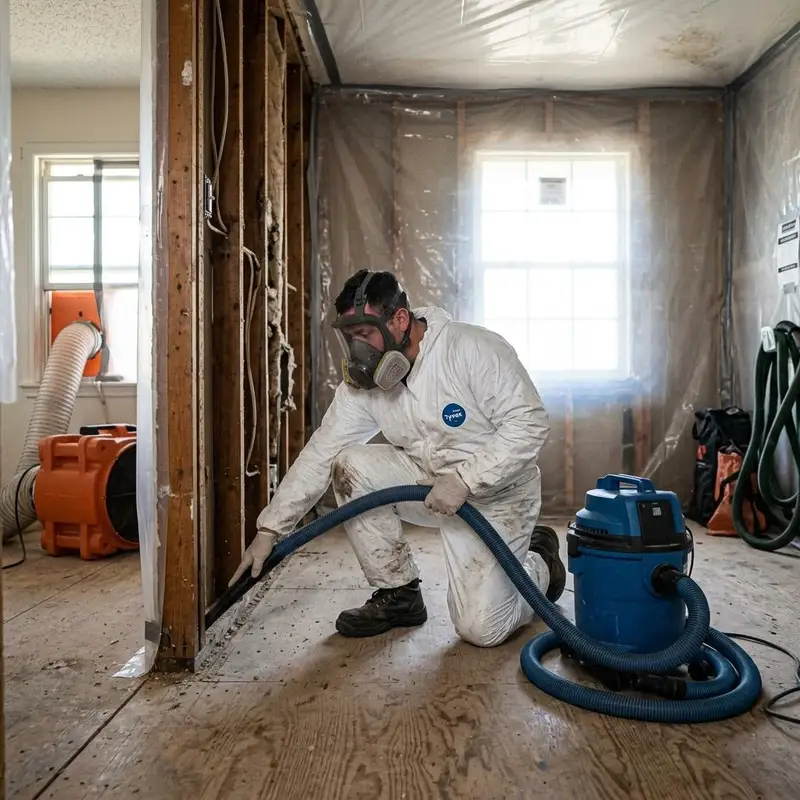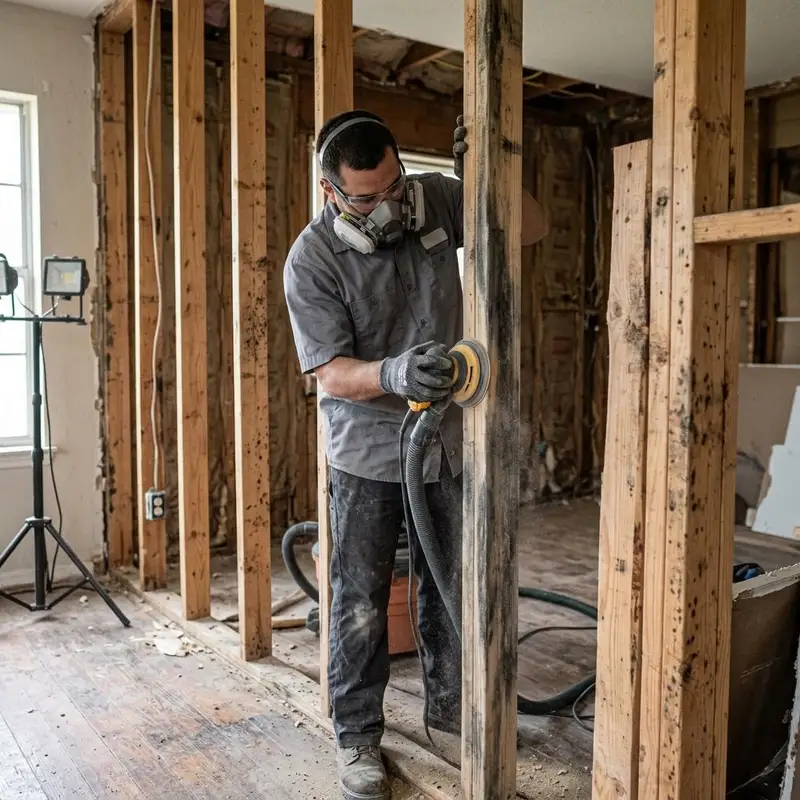
Unlike drywall, structural wood can usually be cleaned rather than replaced. Wood framing mold treatment removes surface growth from studs, joists, rafters and plates through HEPA vacuuming, cleaning and sanding where needed.
The Problem Behind Wood Framing Mold Treatment
Framing gets wet from leaks, floods and condensation, and growth settles into its surface. Leaving it in place under new drywall can bring back odor and growth. Replacing sound framing unnecessarily adds cost and disruption. The right approach cleans the wood back to sound material.
Signs You May Need Wood Framing Mold Treatment
- Dark staining or fuzzy growth on exposed studs
- Framing revealed during drywall removal
- Attic rafters or crawl space joists with growth
- Lingering odor after drywall replacement
What the Work Includes
- Moisture checks to confirm wood is drying
- HEPA vacuuming of framing surfaces
- Wire brushing or sanding of affected areas
- Cleaning and optional coating after treatment
Our Wood Framing Mold Treatment Process
- STEP 1
Check moisture
Wood must be drying before treatment is effective.
- STEP 2
Vacuum first
Loose growth and debris are removed with HEPA equipment.
- STEP 3
Clean the surface
Brushing or sanding removes growth from the wood surface.
- STEP 4
Finish and verify
Surfaces are wiped and reviewed before walls close.
A Fort Worth Consideration
Pier and beam homes in Fort Worth have plenty of exposed framing below the floor. The same treatment approach works for crawl space joists and attic rafters.
Wood Framing Mold Treatment Near You
We provide wood framing mold treatment for property owners in Downtown Fort Worth, Forest Hill, Edgecliff Village, Westover Hills, River Oaks, Sansom Park and White Settlement. If you are searching for help nearby, call to describe your situation or email photos to [email protected]. We answer Monday to Saturday, 8am to 7pm.